- Blog
Why the Pune–Nagpur Industrial Corridor is India’s Next Logistics Frontier
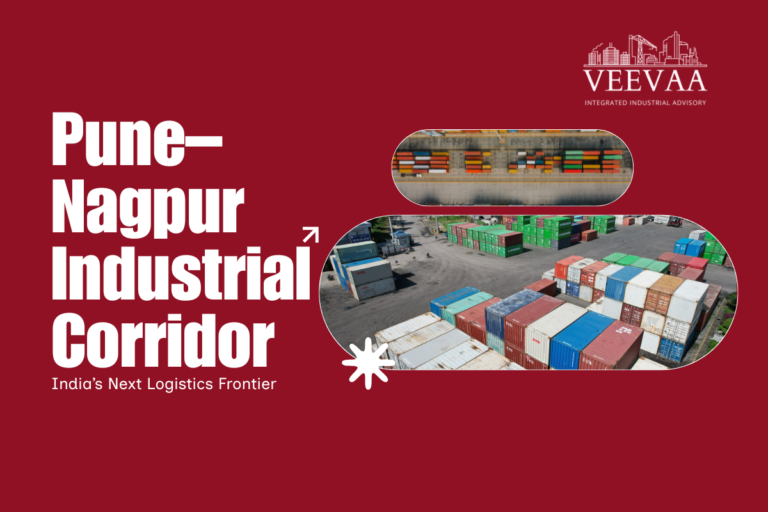
India’s industrial landscape is evolving rapidly, and the Pune–Nagpur Industrial Corridor is emerging as a game-changer for manufacturers, OEMs, and logistics developers. Strategically spanning Maharashtra from Pune in the west to Nagpur in the east, this corridor promises to transform the way goods move, industries operate, and investments flow in the state. For industrial investors, plant heads, and developers, understanding its geography, infrastructure, and land potential is key to tapping into this high-growth region.
Strategic Geography and Connectivity
The Pune–Nagpur corridor cuts across central Maharashtra, connecting major industrial hubs while bridging key urban and rural markets. Pune, known for its automotive, IT, and electronics clusters, acts as a major manufacturing base, while Nagpur, with its central location, serves as a strategic distribution hub for India’s east and north regions.
One of the corridor’s biggest advantages is its alignment with the Samruddhi Mahamarg (Mumbai–Nagpur Expressway). This 701-kilometer high-speed expressway drastically reduces travel time between Maharashtra’s western and eastern regions, making the corridor a highly efficient route for transporting raw materials and finished goods. For logistics and supply chain operations, reduced transit times mean lower costs, faster deliveries, and greater reliability—key considerations for OEMs and industrial developers.
Modern Infrastructure Driving Growth
The corridor is not just a road; it is a comprehensive industrial and logistics ecosystem. Along its path, several logistics parks, warehousing hubs, and industrial clusters are being planned and developed. These parks are equipped with modern facilities such as container yards, cold storage, and automated material handling systems.
For industrial investors, these infrastructure developments create opportunities to set up efficient distribution centers and just-in-time manufacturing units, which reduce inventory costs and improve operational efficiency. The corridor also integrates with rail and air networks, further enhancing connectivity for both domestic and international trade.
Abundant Industrial Land Availability
One of the most attractive features of the Pune–Nagpur Industrial Corridor is the availability of industrial land at strategic locations. Several industrial zones along the corridor are being earmarked for OEM plants, logistics hubs, and allied infrastructure. This not only provides options for large-scale manufacturing but also allows developers to plan long-term expansions without the constraints of urban land scarcity.
Strategic site selection is essential for optimizing logistics efficiency. Industrial investors can leverage the corridor’s layout to position manufacturing units close to supply sources while keeping distribution networks highly accessible. This land and location strategy ensures scalability, cost optimization, and long-term competitiveness.
Opportunities for OEMs and Logistics Developers
The corridor’s unique combination of connectivity, modern infrastructure, and land availability presents several high-value opportunities:
- Integrated Logistics Parks: Developers can set up specialized parks for warehousing, last-mile delivery, and cold-chain logistics.
- Green Manufacturing Units: OEMs have the opportunity to incorporate energy-efficient and sustainable operations while benefiting from government incentives along the corridor.
- Cluster-Based Industrial Development: Businesses can join emerging industrial clusters, reducing operational costs and accessing shared resources like labor and technology.
- Export-Oriented Facilities: With improved connectivity to ports and central India, companies can enhance their export logistics and supply chain reliability.
Conclusion
The Pune–Nagpur Industrial Corridor is quickly becoming Maharashtra’s next logistics frontier. Its strategic geography, state-of-the-art infrastructure, and ample industrial land make it a highly attractive destination for OEMs, industrial investors, and plant heads looking to expand operations. By planning smartly and leveraging corridor-specific incentives, businesses can position themselves for long-term growth, reduced operational costs, and a competitive advantage in India’s industrial ecosystem.
For developers and investors, now is the time to explore the Pune–Nagpur corridor, identify high-potential sites, and capitalize on the logistics and industrial opportunities it offers.